
Studying the migratory habits of sea turtles
Updated: 2012-02-29 15:22:29
Physics Today News Picks A blog of hand-picked science news from the staff of Physics Today Home Print edition Advertising Buyers Guide Jobs Events calendar ITER solves problem with superconducting cables News Picks home Studying the migratory habits of sea turtles By Physics Today on February 29, 2012 10:22 AM No Comments No TrackBacks Science Because leatherback sea turtles are endangered , a group of researchers at Stanford University has started looking at their migratory patterns to try to determine ways to protect the aquatic reptiles . The group's results have been published in the Proceedings of the Royal Society B Adult sea turtles lay their eggs on beaches along the eastern Pacific Ocean around Costa Rica . Once hatched , the babies make their way to the sea . As young turtles
 At the Fermilab Test Beam Facility, scientists from around the world line up to test new detector technologies that will help shape the future of particle physics. Whether experimenters need a few pions or lots of protons, the FTBF can deliver: It offers the only high-energy hadron test beam in the United States.
 First google "Antonio Ereditato", spokesperson of the OPERA experiment at Gran Sasso, and watch some videos. Then continue reading here.The guy is a womanizer. Such men should never be taken seriously. Here is why: when people in his experiment found that the neutrinos are not faster than light, but that a faulty cable falsely gave this result, he wrote a press report in which he claimed that there was a second error that could revive the sensational finding. This is a lie, obviously just added to save face.Ereditato is a crook - like every womanizer is.
 Today, scientists from the CDF collaboration have unveiled the world's most precise measurement of the W boson mass, based on data gathered at the Tevatron accelerator. The precision of this measurement surpasses all previous measurements combined and restricts the space in which the Higgs particle should reside according to the Standard Model, the theoretical framework that describes all known subatomic particles and forces.
 Albert Einstein's law of special relativity might shrug off the challenge of faster-than-light neutrinos after all. Scientists in the OPERA collaboration announced today that they have found two possible causes for the surprising results they presented in September 2011, in which neutrinos seemed to beat Einstein's cosmic speed limit.
 As discussed in this blog post in Scientific American (see blog post here) the Tevatron experiments may have a few last interesting things to say when it comes to the Higgs Boson at the March meetings. At the American Association for the Advancement of Science meeting Collider Detector at Fermilab (CDF) spokes person Rob Roser [...]
 Our February issue runs the gamut from the proud 30-year-legacy of the Tevatron Collider to the latest popular physics sensation: faster-than-light neutrinos.
 Winter conference season [*] is upon us, which means everybody is busy preparing new results. Today, instead of talking about the physics itself, I’m going to discuss the process around it; namely the procedure which the results of an LHCb analysis [**] need to go through before being released. There are two ways in which [...]
 Working with an international team, three physicists from Brookhaven Lab have helped to demonstrate the feasibility of a new kind of particle accelerator that may be used in future physics research, medical applications, and power-generating reactors. The team reported the first successful acceleration of particles in a small-scale model of the accelerator in a paper [...]
 Tweet Pauli’s Exclusion Principle We have shown throughout the Imagineer’s Chronicles and its companion book "The Reality of the Fourth *Spatial* Dimension" there would many theoretical advantages to defining the universe in terms of four *spatial* dimensions instead of four dimensional space-time. One is that it would allow for the derivation of Pauli’s exclusion principle [...]
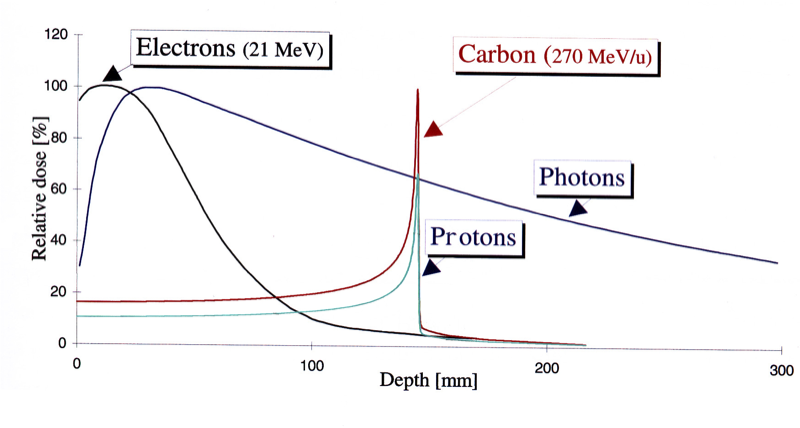 Most people associate CERN with the Large Hadron Collider (LHC). But lesser known although extremely diversified research activities are also ongoing at CERN. About a thousand physicists are working on experiments ranging from antimatter studies to cancer therapy, cloud formation and radioisotope production. Already in 2011, the ALPHA experiment made the headlines when they managed [...]
 Hi everyone—it’s time that I wrap up some old posts about the Higgs boson. Last December’s tantalizing results may end up being the first signals of the real deal and the physics community is eagerly awaiting the combined results to be announce at the Rencontres de Moriond conference next month. So now would be a great [...]
 Readers who submitted to our "My Physical Romance” readers' challenge found love through physics and, sometimes, physics through love. But in all scenarios, they show the passion that physics can inspire.
 You're invited to tour an underground cavern that holds one of the largest scientific experiments in the world. Tomorrow, Feb. 15, the head of the CMS experiment at the Large Hadron Collider, physicist Joe Incandela, will chat live from the CMS detector 100 meters underground in France via a Google+ Hangout.
 CERN scientists will begin running the Large Hadron Collider at a higher energy than ever before when this winter’s technical stop comes to a close in mid-March, the laboratory announced in a press release today.
 The situation about Yang-Mills theory is finally settling down. I do not mean that mathematicians’ community has finally decided the winner of the Millenium prize but rather that people working on the study of two-point functions on a pure Yang-Mills theory have finally a complete scenario for it. These studies have seen very hot debates [...]
 CERN hosted the Swiss semi-finals for FameLab science communication competition on Feb. 4. Of the 21 researchers and students who braved the frigid weather to take a turn sharing their knowledge on stage, five will advance to the national finals in Zurich at the end of March.
  Before next week’s holiday, we at Symmetry Breaking want to know about your affair with physics. Send us a love letter (or “Dear John” letter) about your research, a playful pun about a physical concept, or a story about a connection you’ve made with a fellow scientist. Post your comments here or send them to scharley@fnal.gov. We will publish our favorites on Feb. 14.
 Brownian motion is a very kind mathematical object being very keen to numerical simulations. There are a plenty of them for any platform and software so that one is able to check very rapidly the proper working of a given hypothesis. For these aims, I have found very helpful the demonstration site by Wolfram and [...]